This past June, my wife Lilia, our son Raphael and I took a nine-day trip to the Great Lakes area. Raphael planned the trip and drove the whole way.
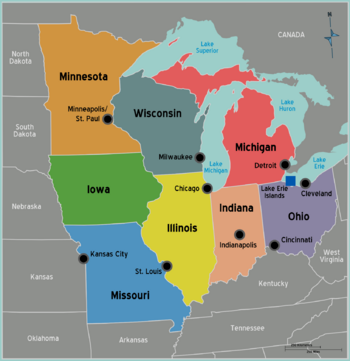
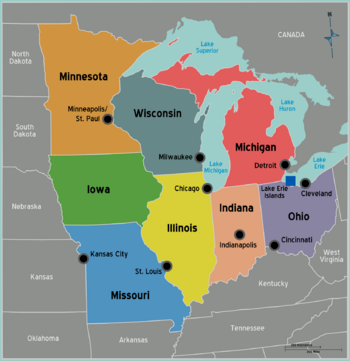
We passed through 7 states: Kansas, Missouri, Iowa, Minnesota, Michigan, Wisconsin, Illinois and one Canadian province (Ontario).
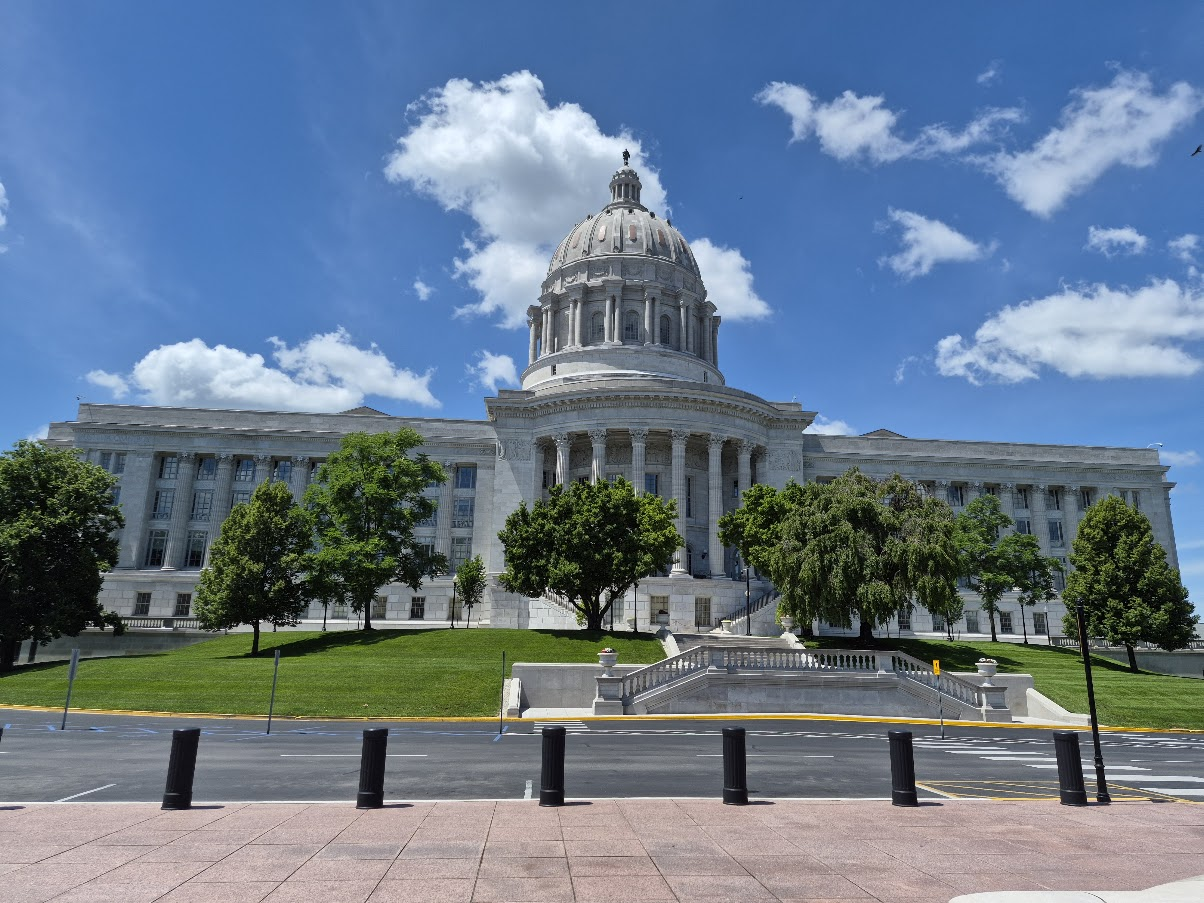
We visited five state capitols in Topeka, Kansas; Des Moines, Iowa; St. Paul, Minnesota; Madison, Wisconsin; and Jefferson City, Missouri.
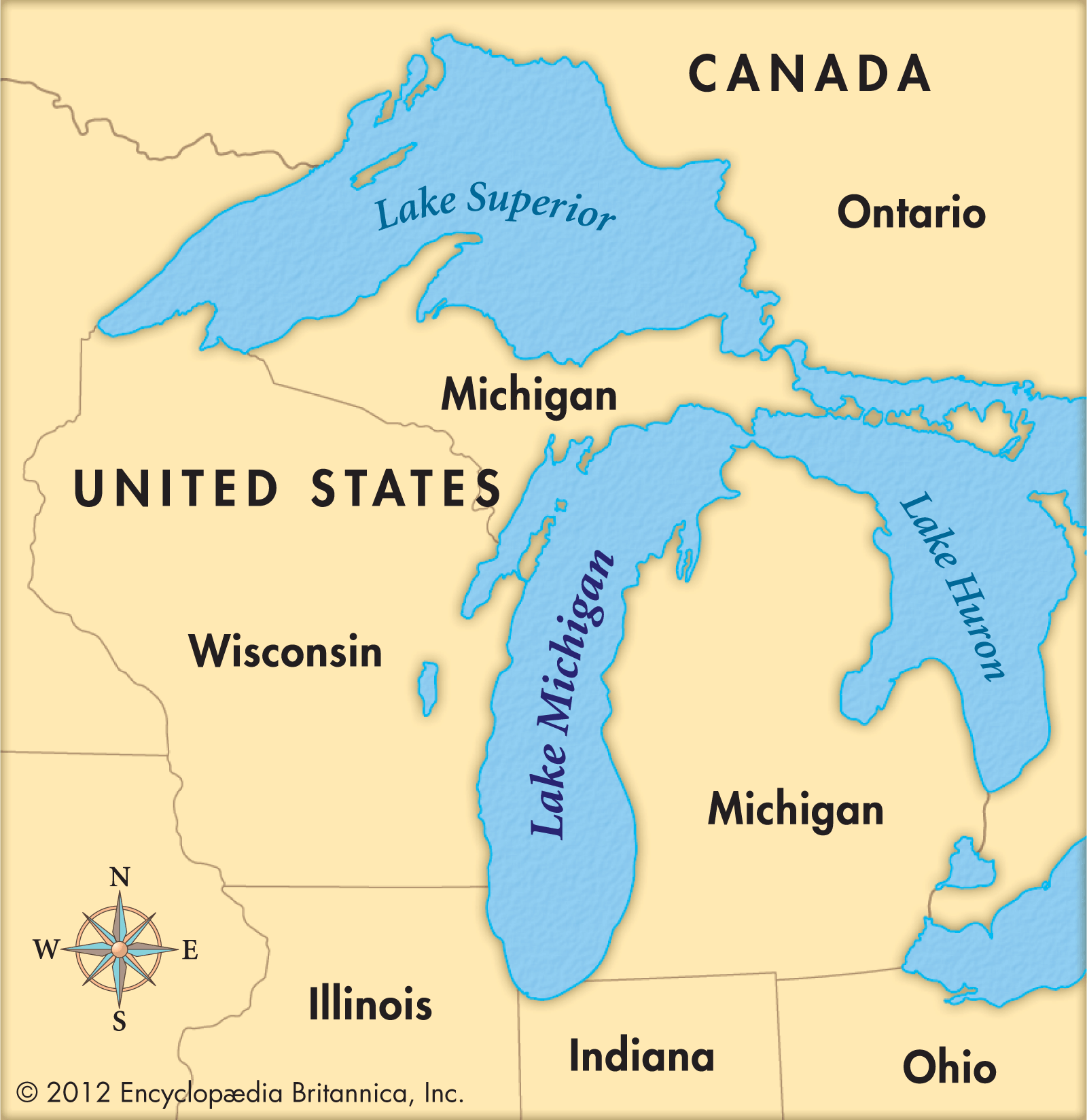
We passed along the coasts of two of the Great Lakes: Lake Superior and Lake Michigan.
We crossed the Mississippi River a number of times. Usually when people think of the Mississippi River they think of the Deep South, where it ends. But the Mississippi River is also an important part of the North, where it begins.
We passed through the Flint Hills in Kansas. This is rolling prairie land.
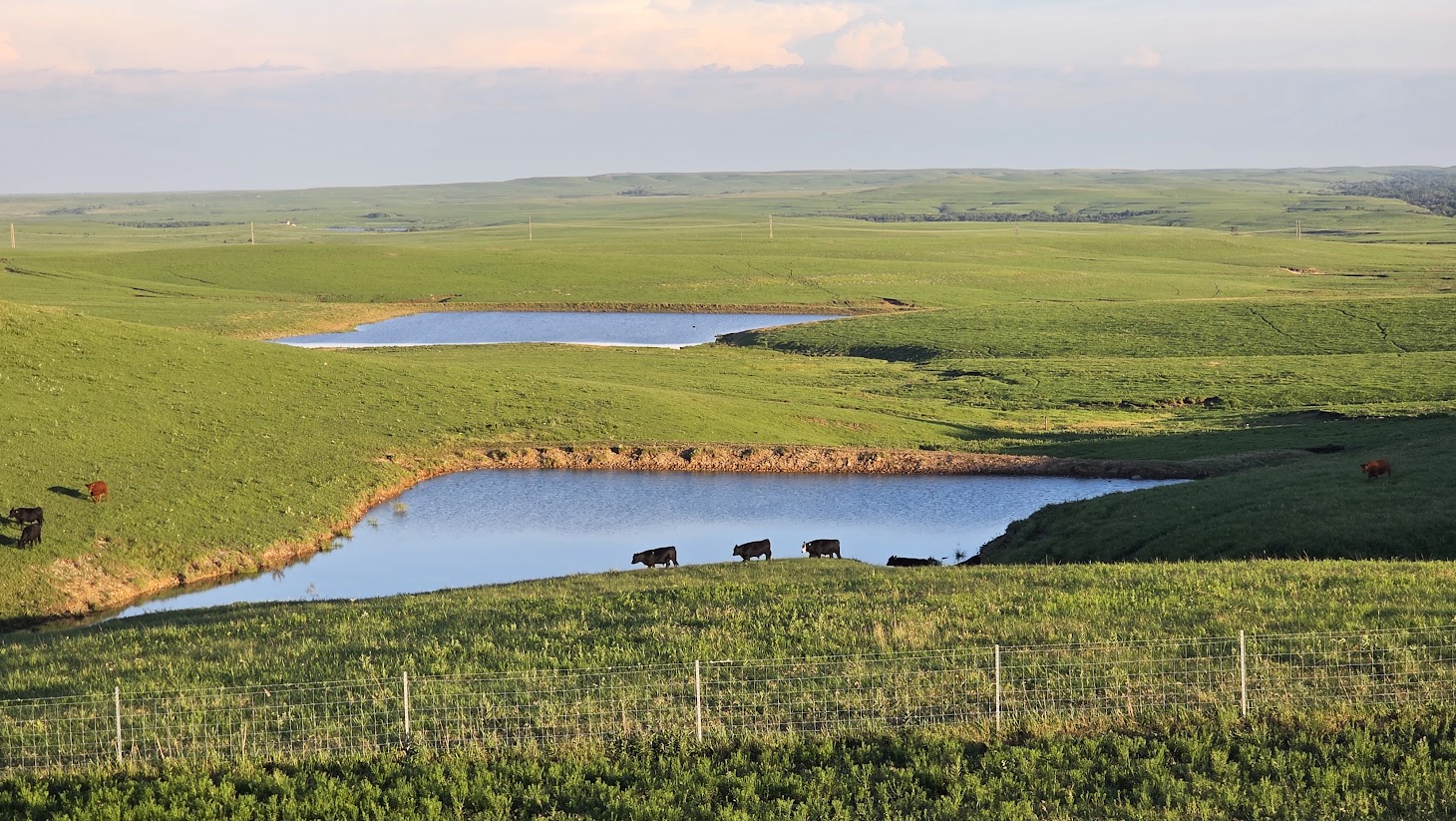
We visited the Kansas Capitol in the capital city of Topeka, Kansas:
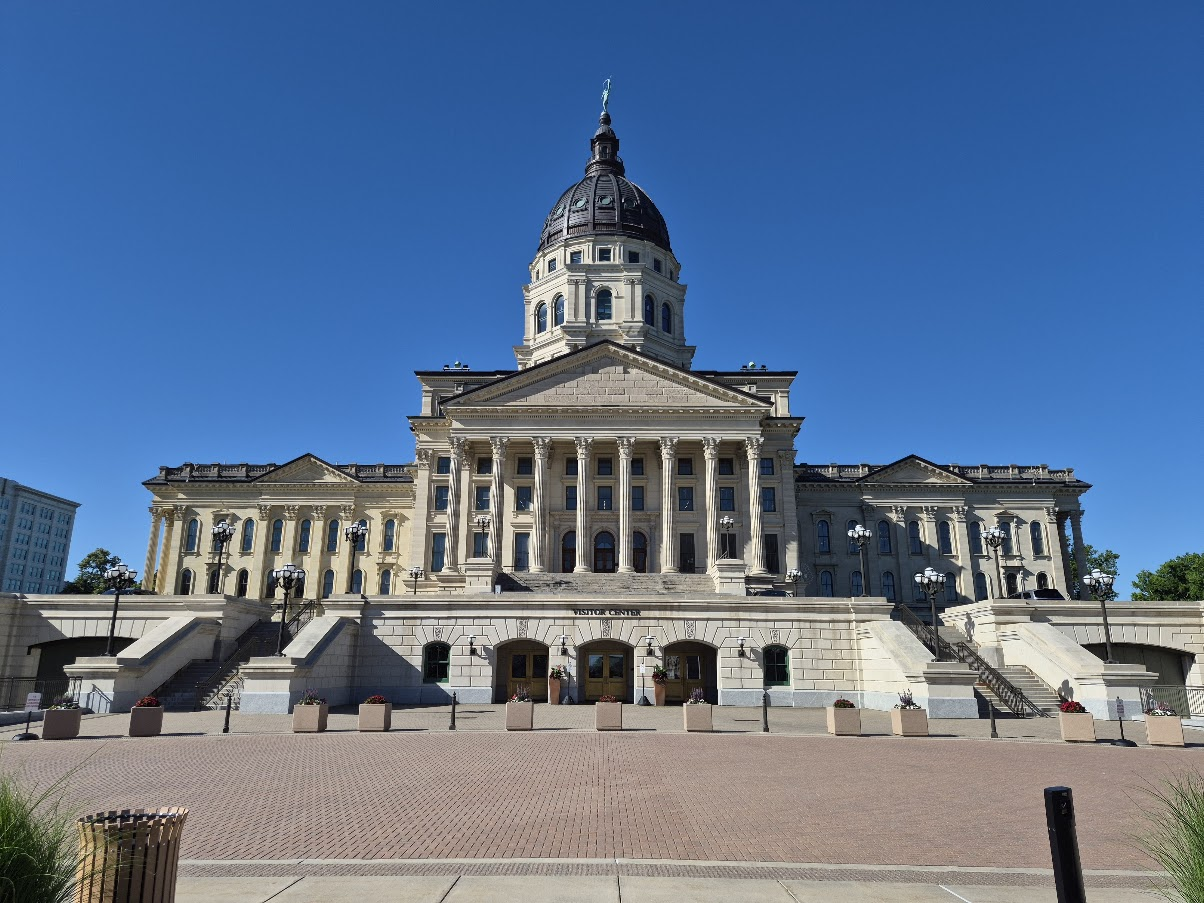
Kansas Capitol, Topeka. Photo by Allan Wall
We passed through the Kansas City metro area, straddling Kansas and Missouri. That’s where the Kansas River feeds into the Missouri River. At that junction of rivers was a campsite of Lewis and Clark, which we visited. It’s called Kaw Point.

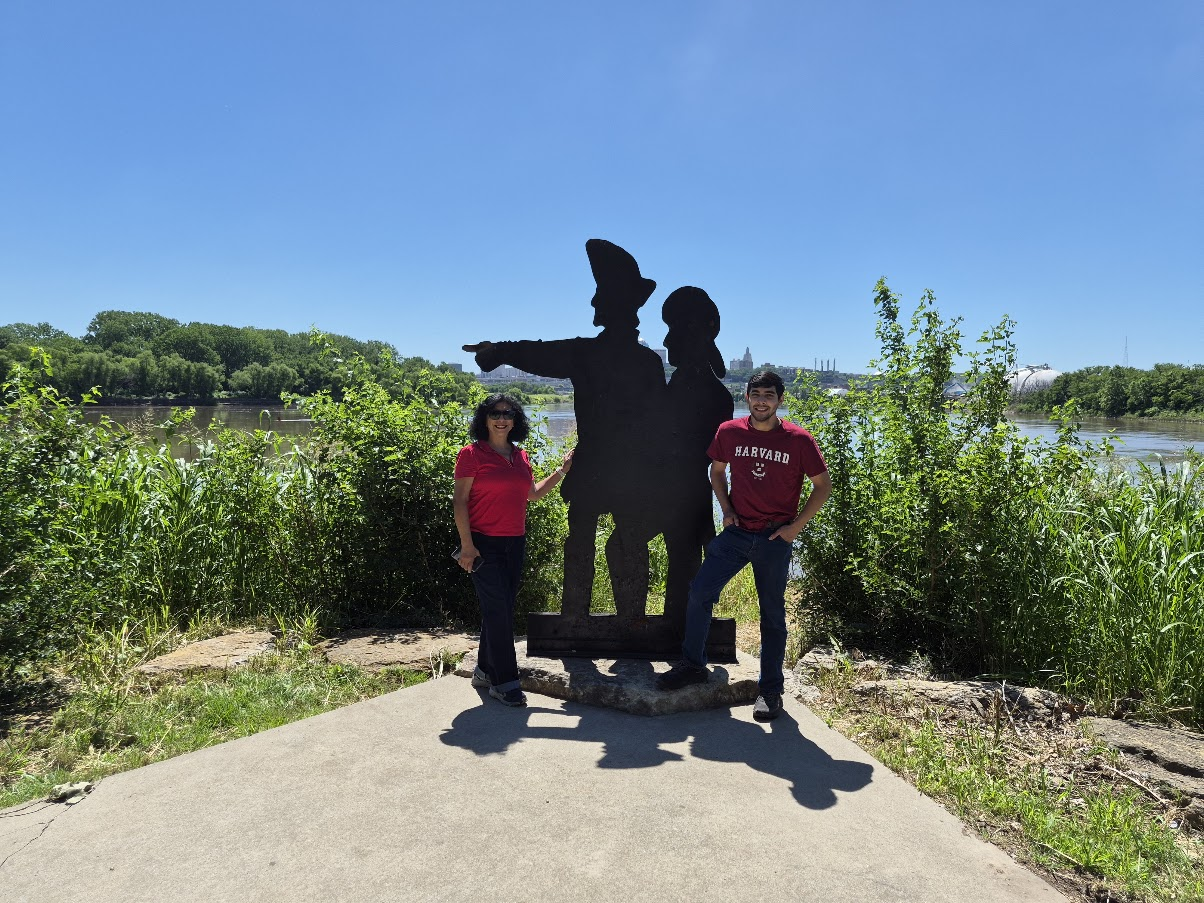
We passed through Missouri and into the state of Iowa where we visited the state capitol at Des Moines:

We eventually made our way to Minnesota. We arrived to the Twin Cities, St. Paul and Minneapolis. It’s been said that St. Paul is the westernmost city of the Eastern United States and Minneapolis is the easternmost city of the Western United States.
We visited George Floyd Square, the site of George Floyd’s death.

The Mississippi River passes through Minneapolis. St. Anthony’s Falls, the only waterfall on the Mississippi, is in downtown Minneapolis. It used to be where the river became navigable. Now there are locks.
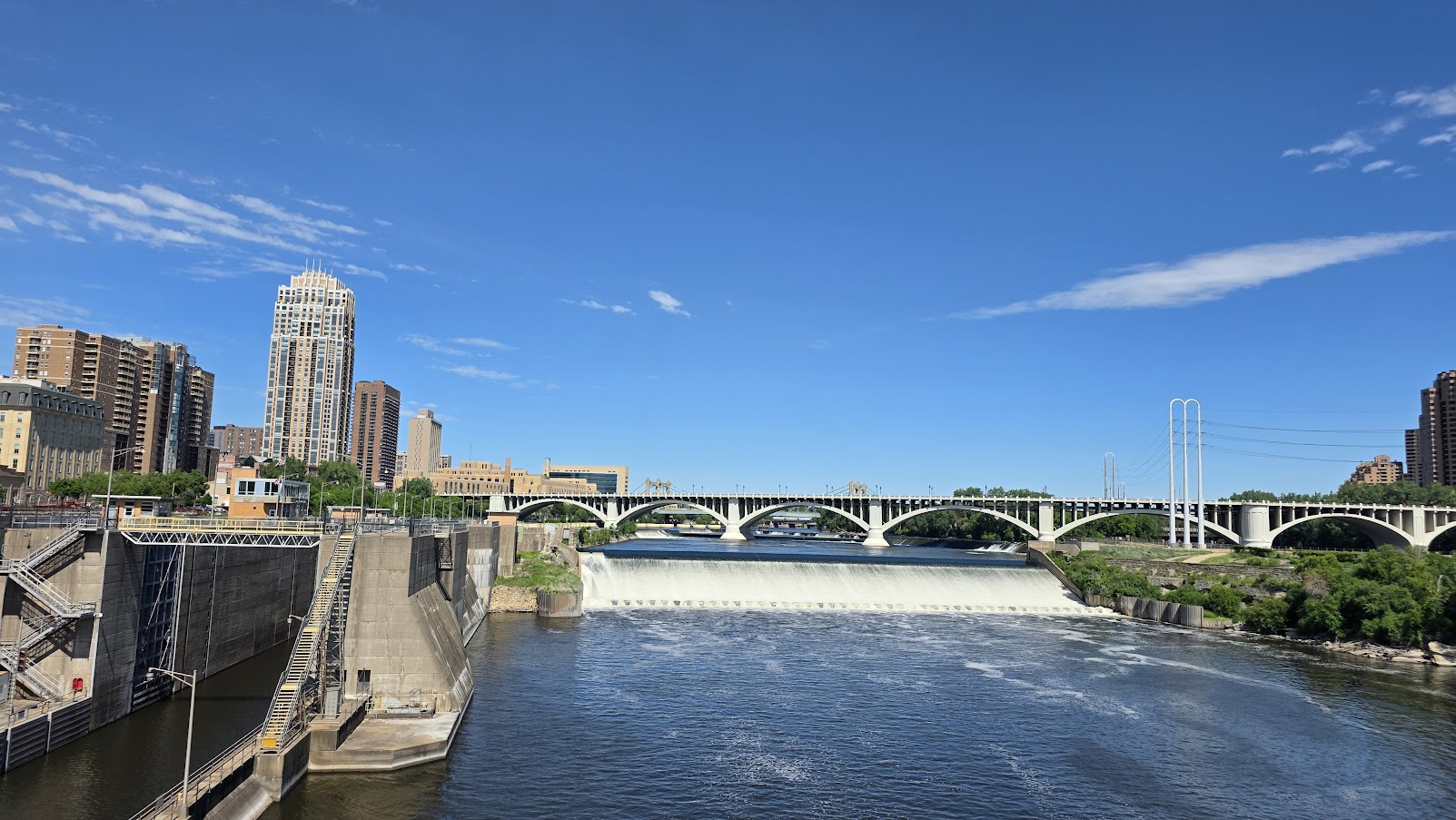
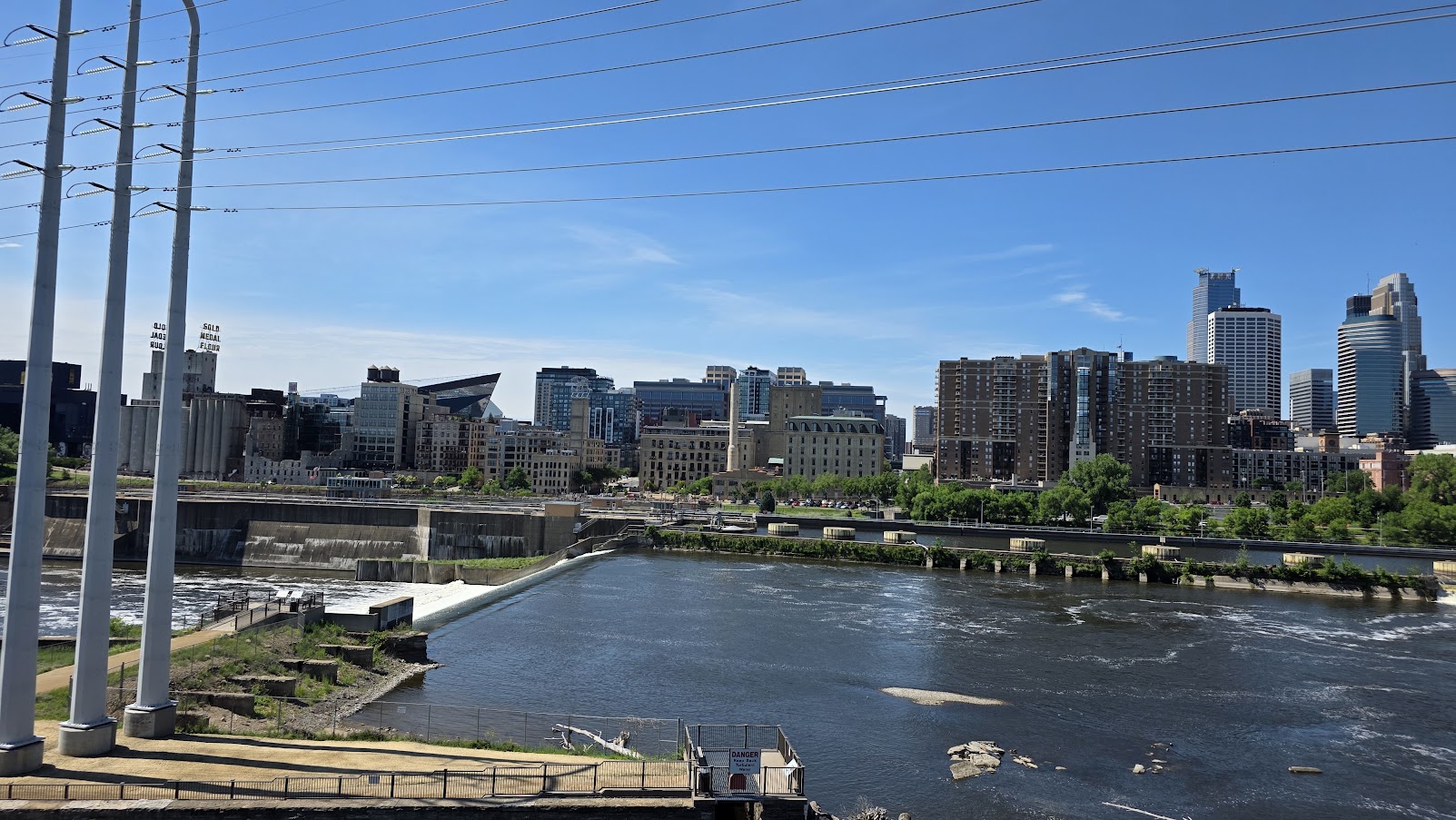
In the 1800s there were mills constructed to take advantage of the Falls’ water power to grind grain.
The Pillsbury company was one of these enterprises, founded in 1869. For 40 years it’s “A Mill” on the bank of the Mississippi was the world’s largest flour mill. The company still exists, now part of General Mills.

St. Paul is the capital of Minnesota, so we visited the capitol. Within sight of the capitol is the Cathedral of St. Paul.

Also in the Twin Cities metro we visited the Wabasha Street Caves in West St. Paul and the massive Mall of America in Bloomington.

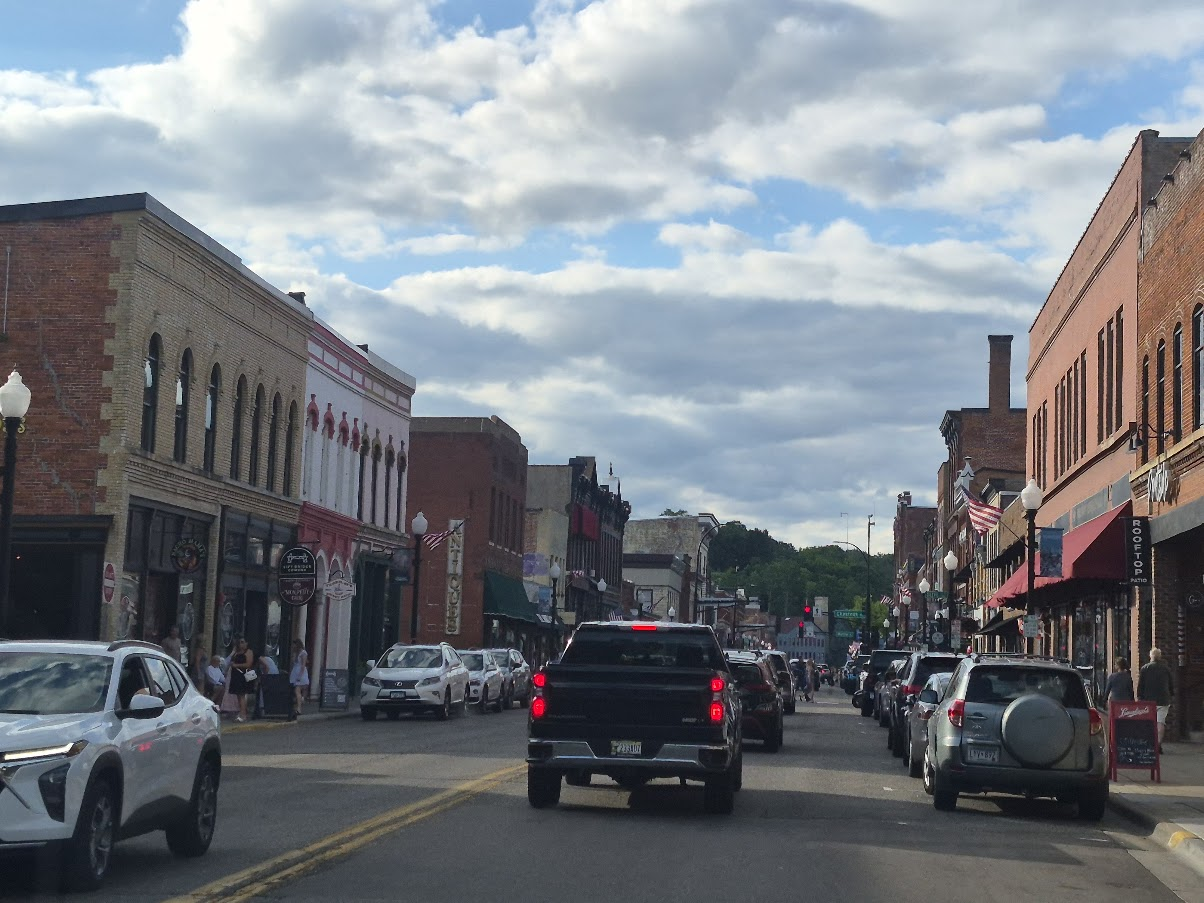
We drove to Stillwater, Minnesota. It’s located on the St. Croix River, with the state of Wisconsin on the other side. The bridge over the river has a section that can be raised up to let boats pass below.

Downtown Stillwater has many boutique-type stores and there were many tourists there.
We finally reached Duluth, Minnesota, on Lake Superior.
Duluth is the end/beginning of I-35, the other end/beginning is Laredo, Texas. Duluth is also the birthplace of Bob Dylan.

From Duluth we headed inland to Lake Itasca, the source of the Mississippi River.
The outlet of Lake Itasca is where the Mississippi River officially begins. A marker reads “Here 1475 feet above the ocean the mighty Mississippi begins to flow on its winding way 2552 miles to the Gulf of Mexico.”
Here is Lake Itasca:
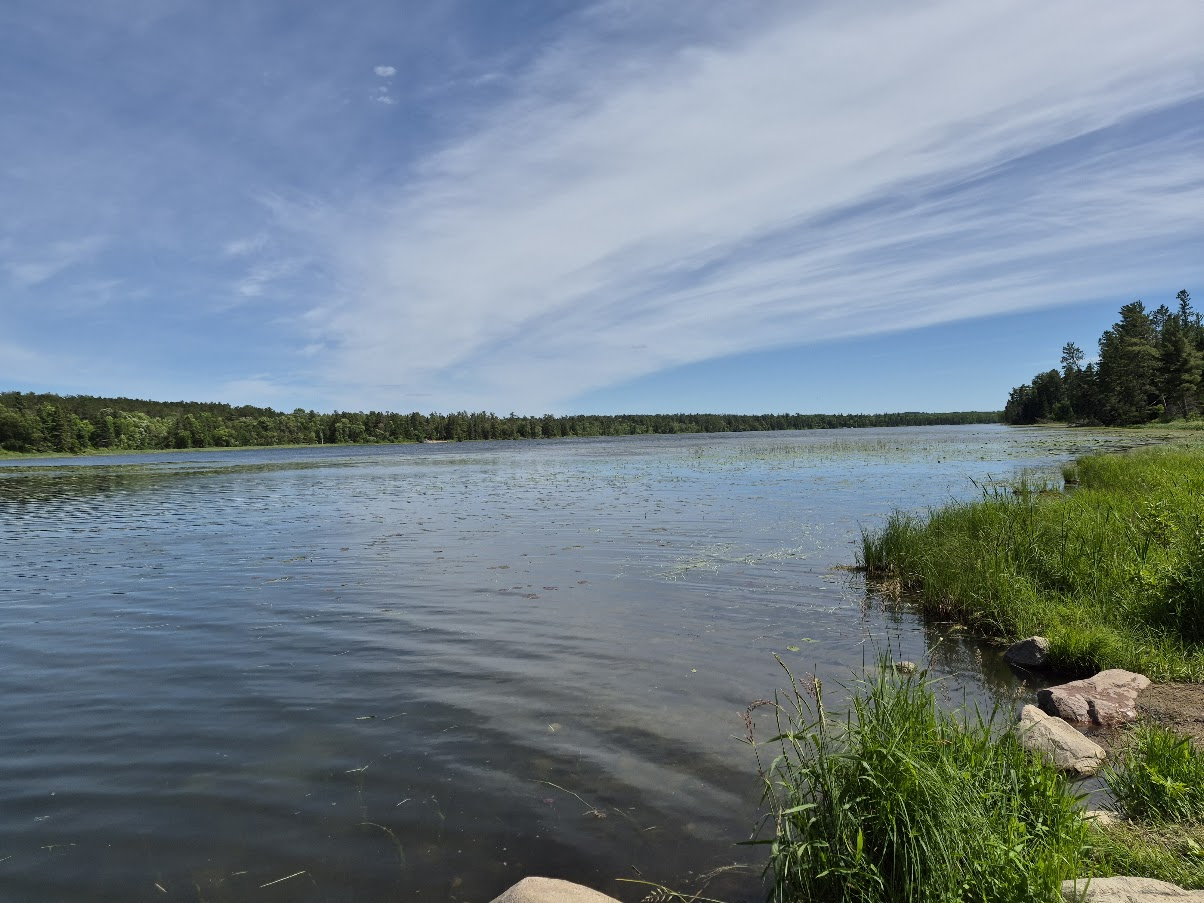
Where the water flows out of Lake Itasca is where the Mississippi River begins:

A little below the source is a wooden plank which is the first bridge over the Mississippi River.
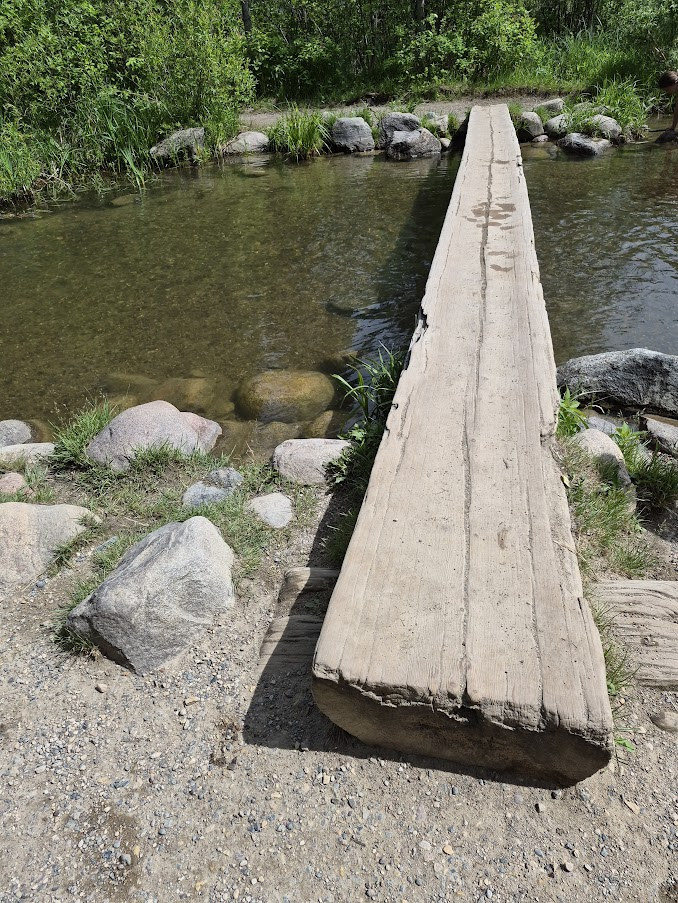
After that we went to Bemidji, the “First City on the Mississippi” where we saw large statues of Paul Bunyan and Babe the Blue Ox.
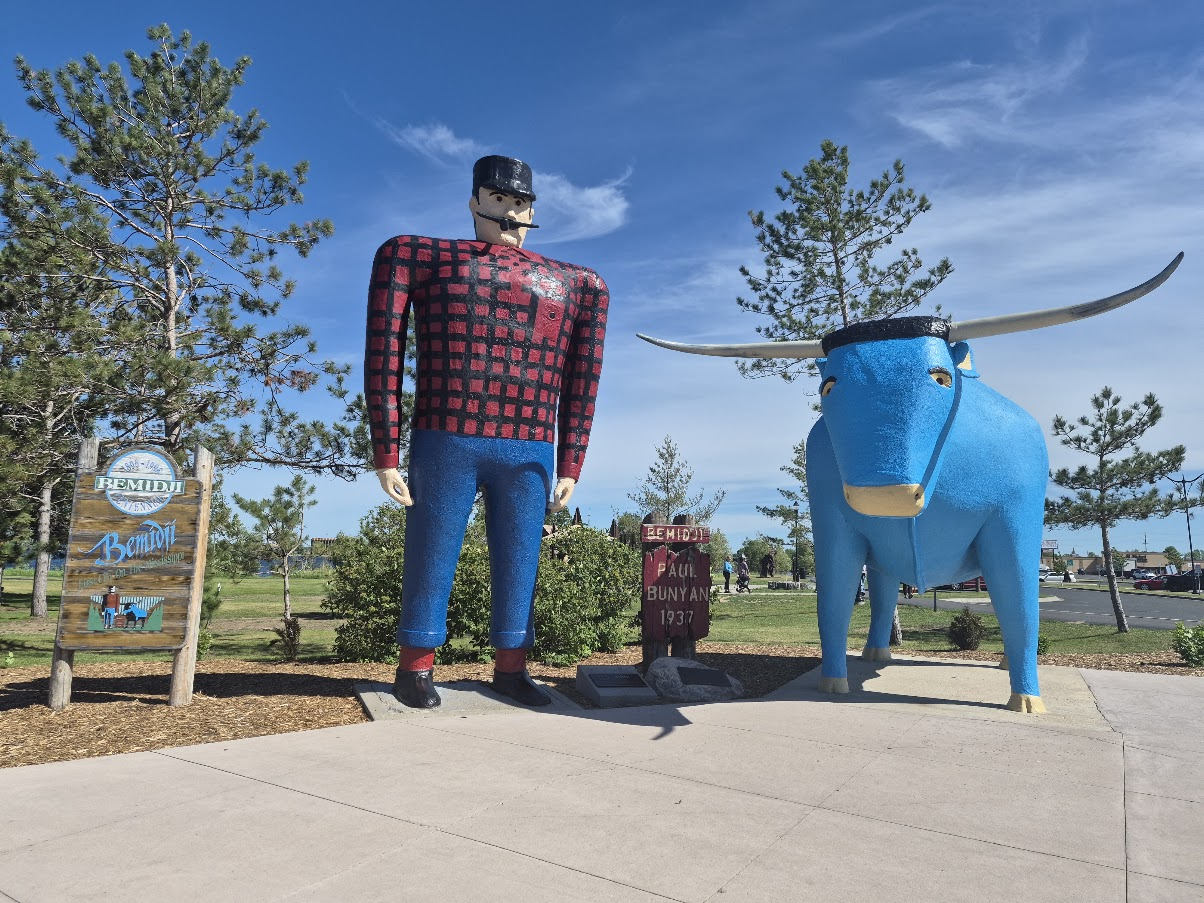
We returned to a part of Duluth on the coast of Lake Superior (lower left on the map). This lake is the largest of the five Great Lakes, the world’s largest freshwater lake by surface area and the world’s third-largest by volume.
Here is a map of Lake Superior:

We continued northeastward up the Minnesota coast of Lake Superior.

We eventually reached the Canadian border.
The Pigeon River forms that part of the border. There is a waterfall on the river called “High Falls”, the U.S.-Canadian border runs right through it.
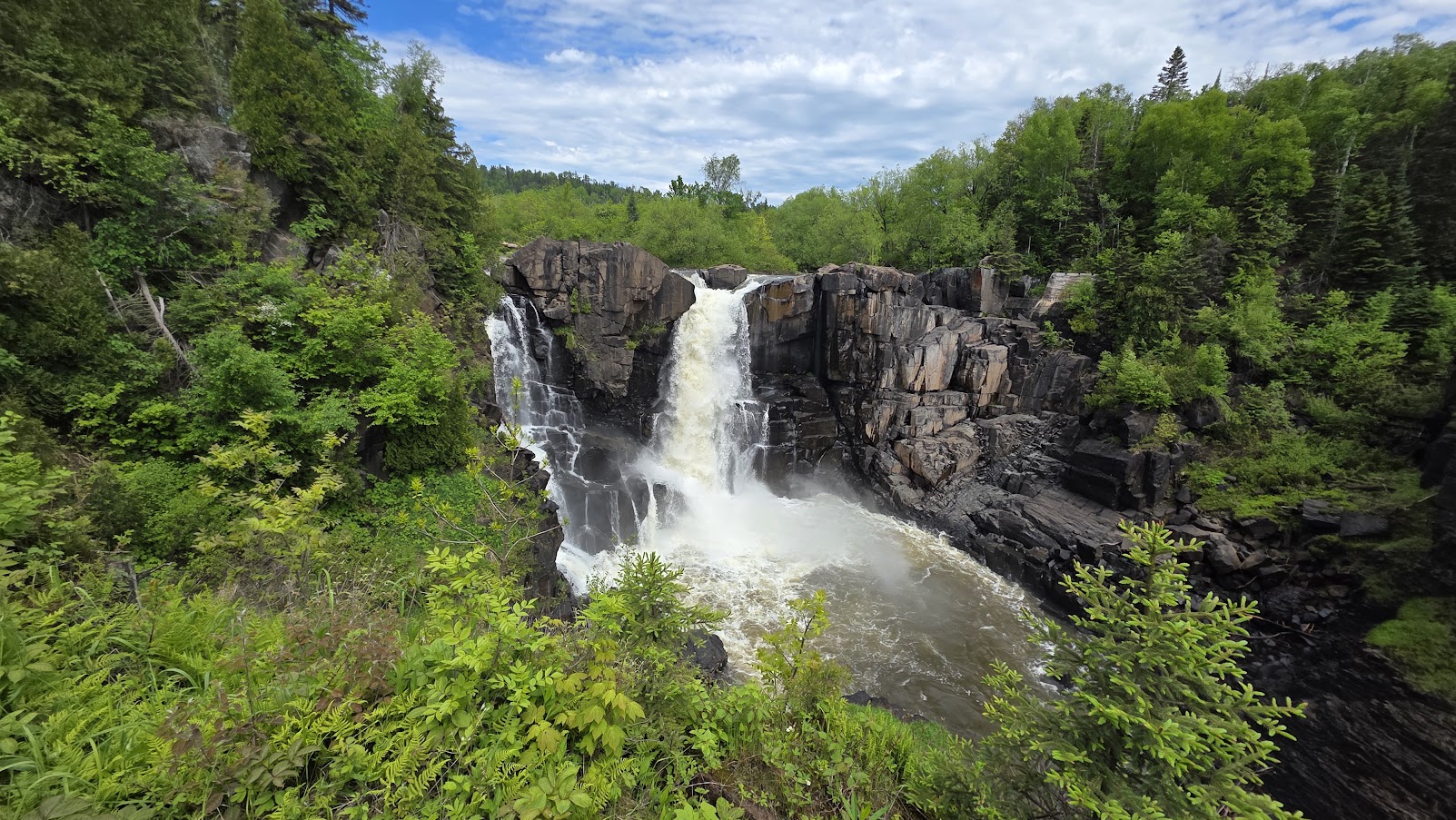
Photo by Lilia Wall.
After visiting the waterfall, we drove across the border into the Canadian province of Ontario.
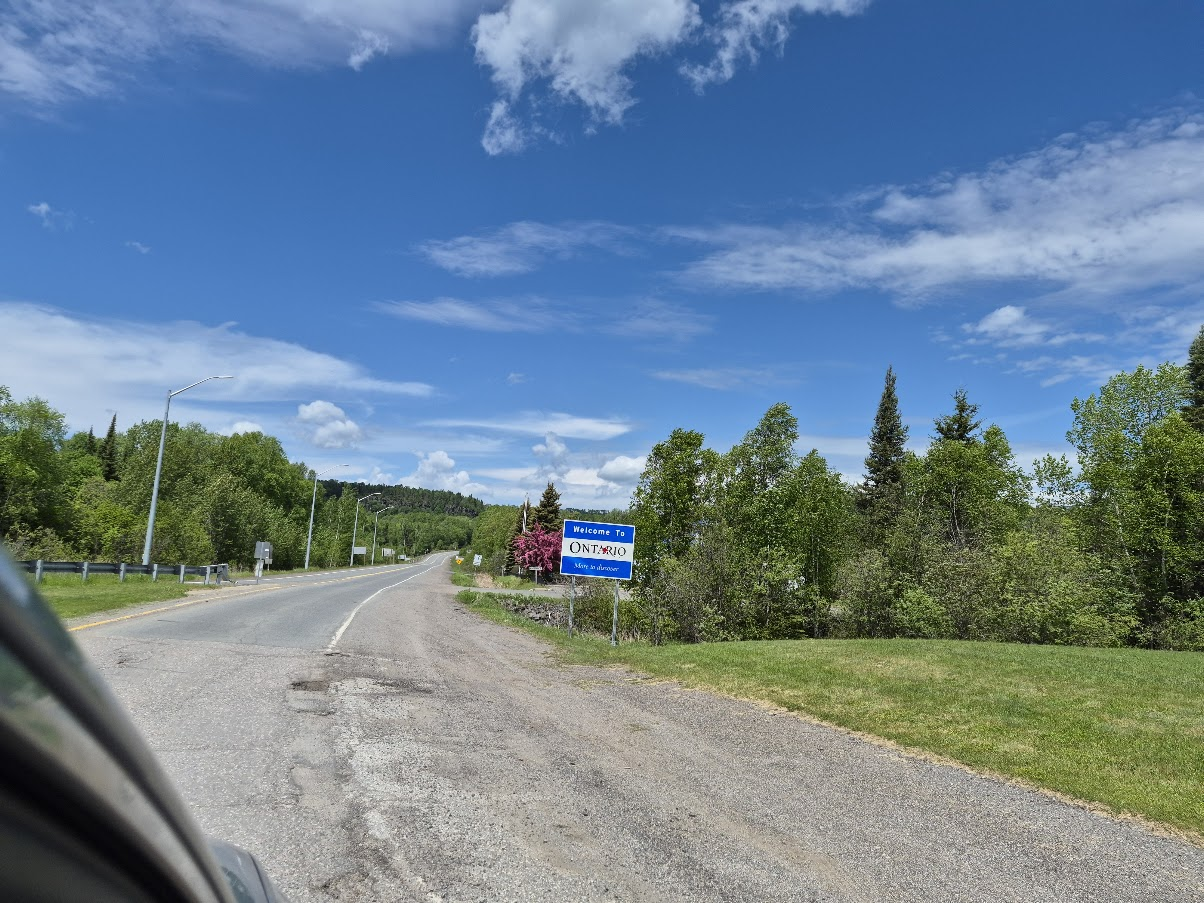
We went to the city of Thunder Bay and the Sleeping Giant Provincial Park. We continued along the northern shore of Lake Superior, driving all the way to the east end of the lake. We were on part of the Trans-Canada Highway.
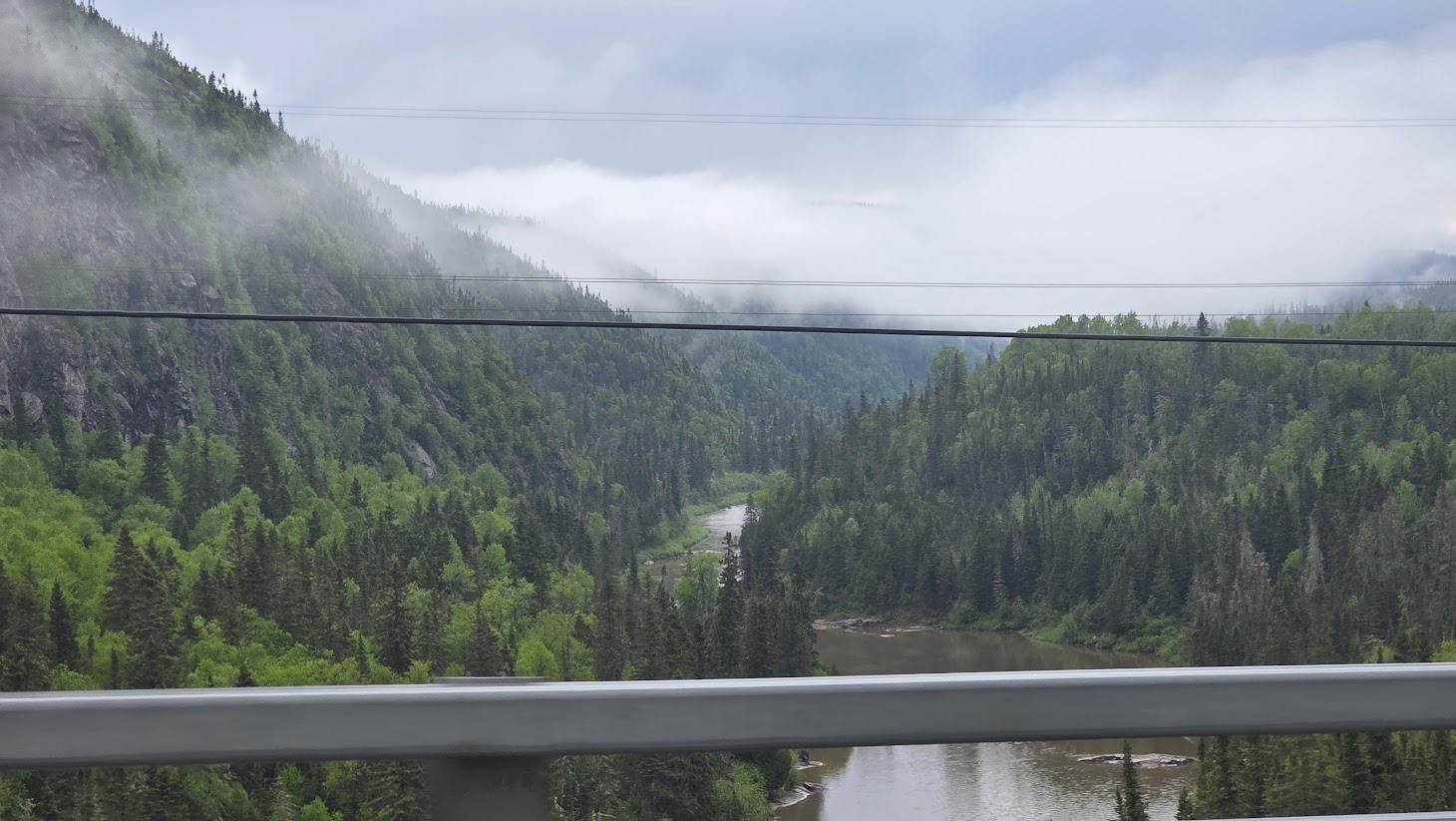
The north shore of Lake Superior is a largely uninhabited part of Ontario, with views of the Lake from time to time, lots of trees, but no agriculture visible from the highway.
We spent the night at a place called “Wawa”, which means wild goose in Ojibwe, so there are 3 wild goose statues in town.
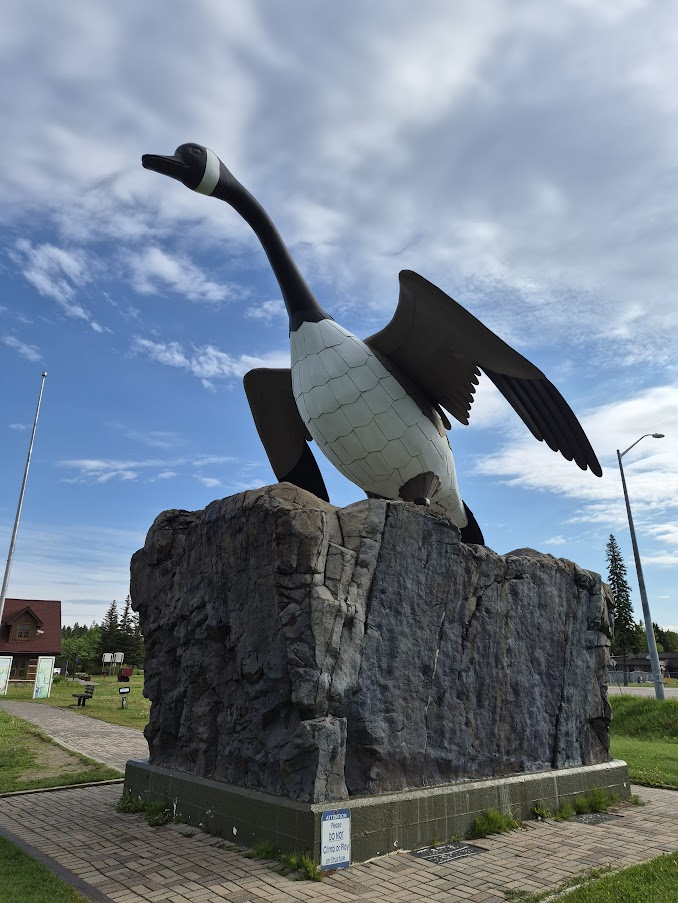
Before the Trans-Canada highway was built (1950-1971), Wawa had been unreachable by land, you had to travel there on a boat over Lake Superior.
In World War II Wawa was the site of a German POW camp. It was a good location for that. If a POW had escaped where would he even have gone?
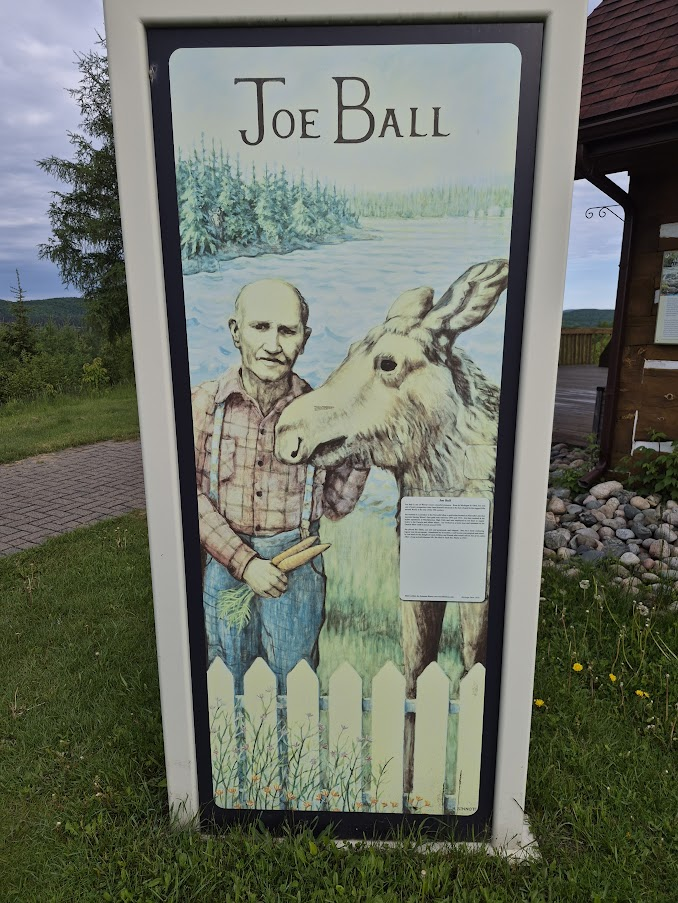
There was also a sign about an American immigrant to WaWa named Joe Ball who had a pet moose. (We never saw a moose on our whole trip).
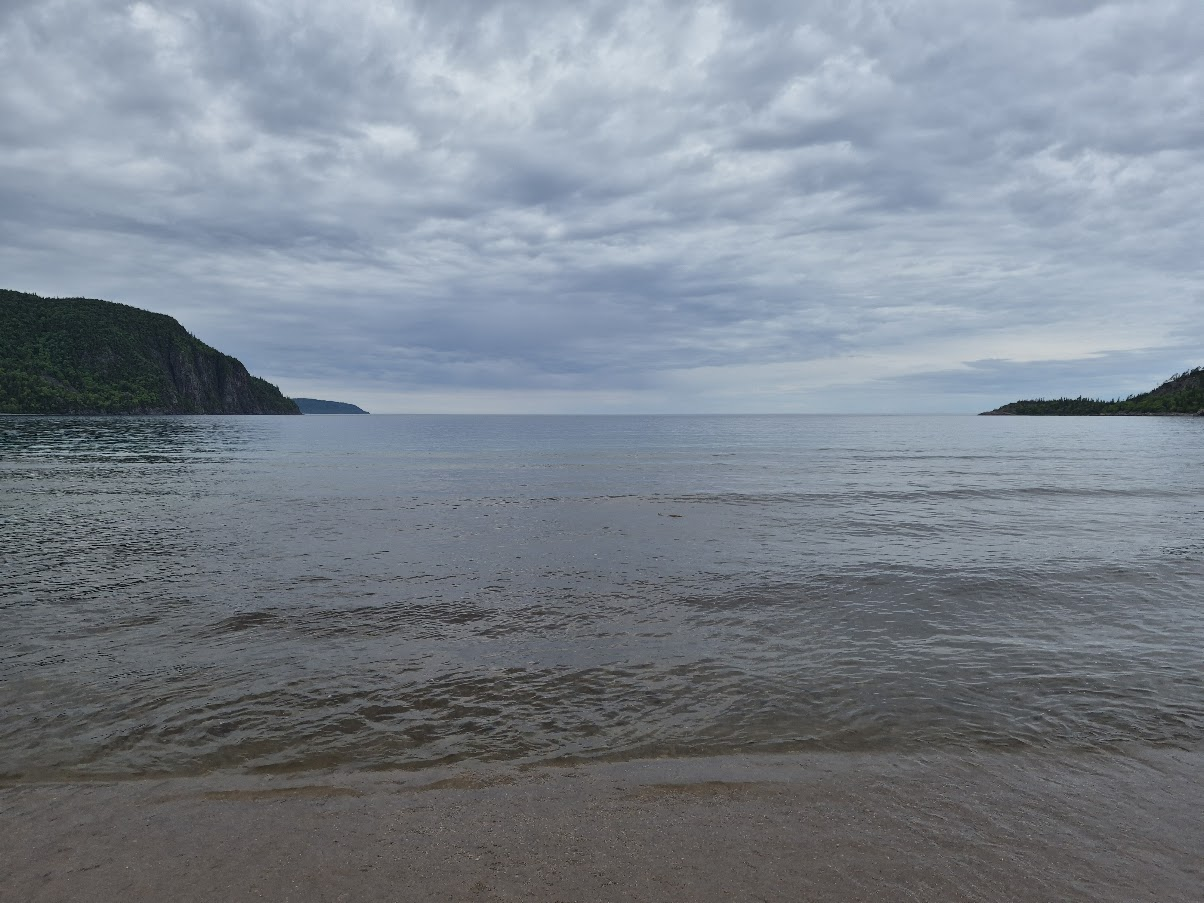
We continued along the coast, stopping at Old Woman Bay and seeing Indian pictographs at another site along the lake.

We crossed back into the United States, at Sault Ste. Marie (pronounced Soo Saint Marie), entering the Upper Peninsula of Michigan.

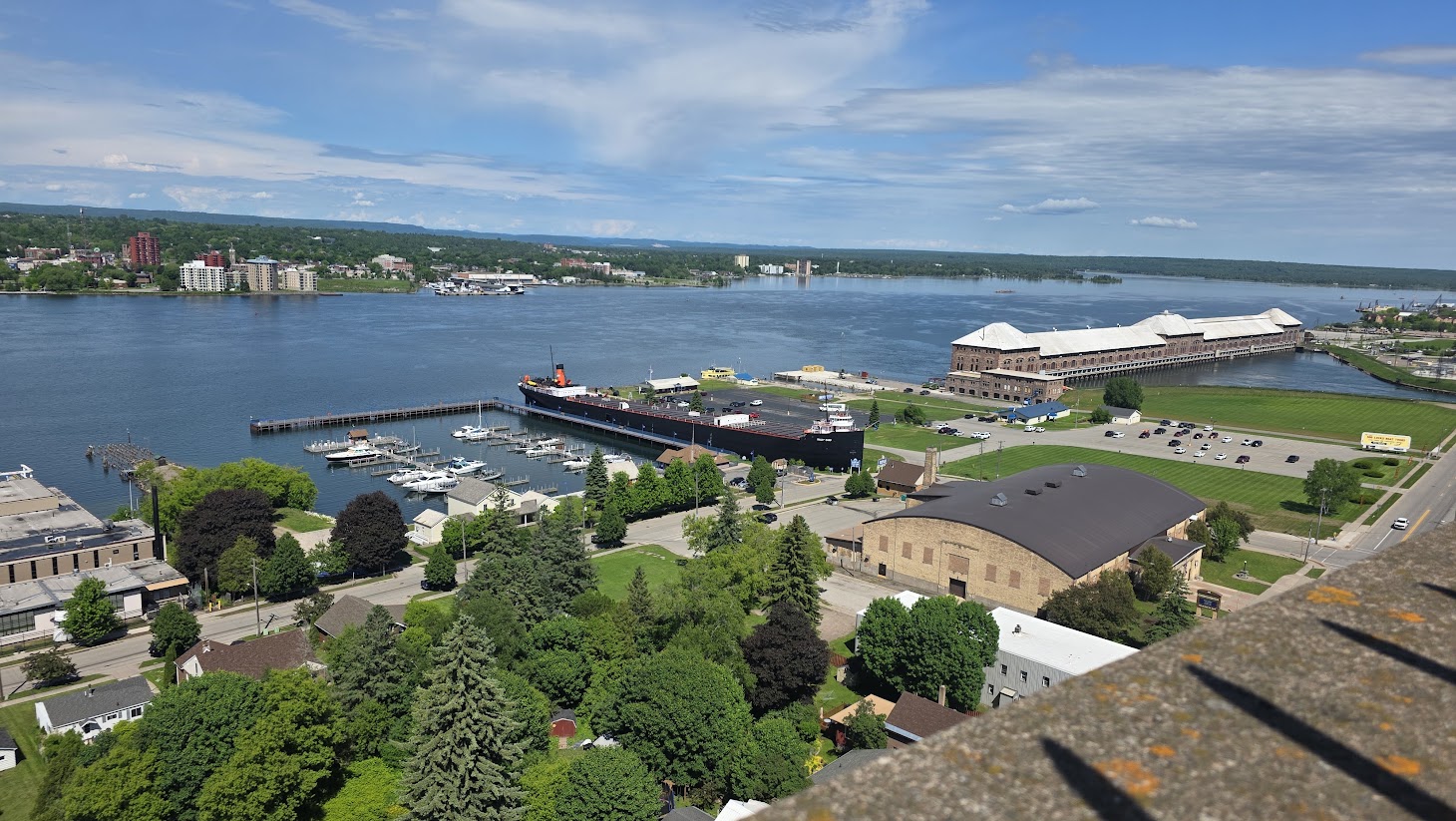
Photo taken from Tower of History by Lilia Wall.
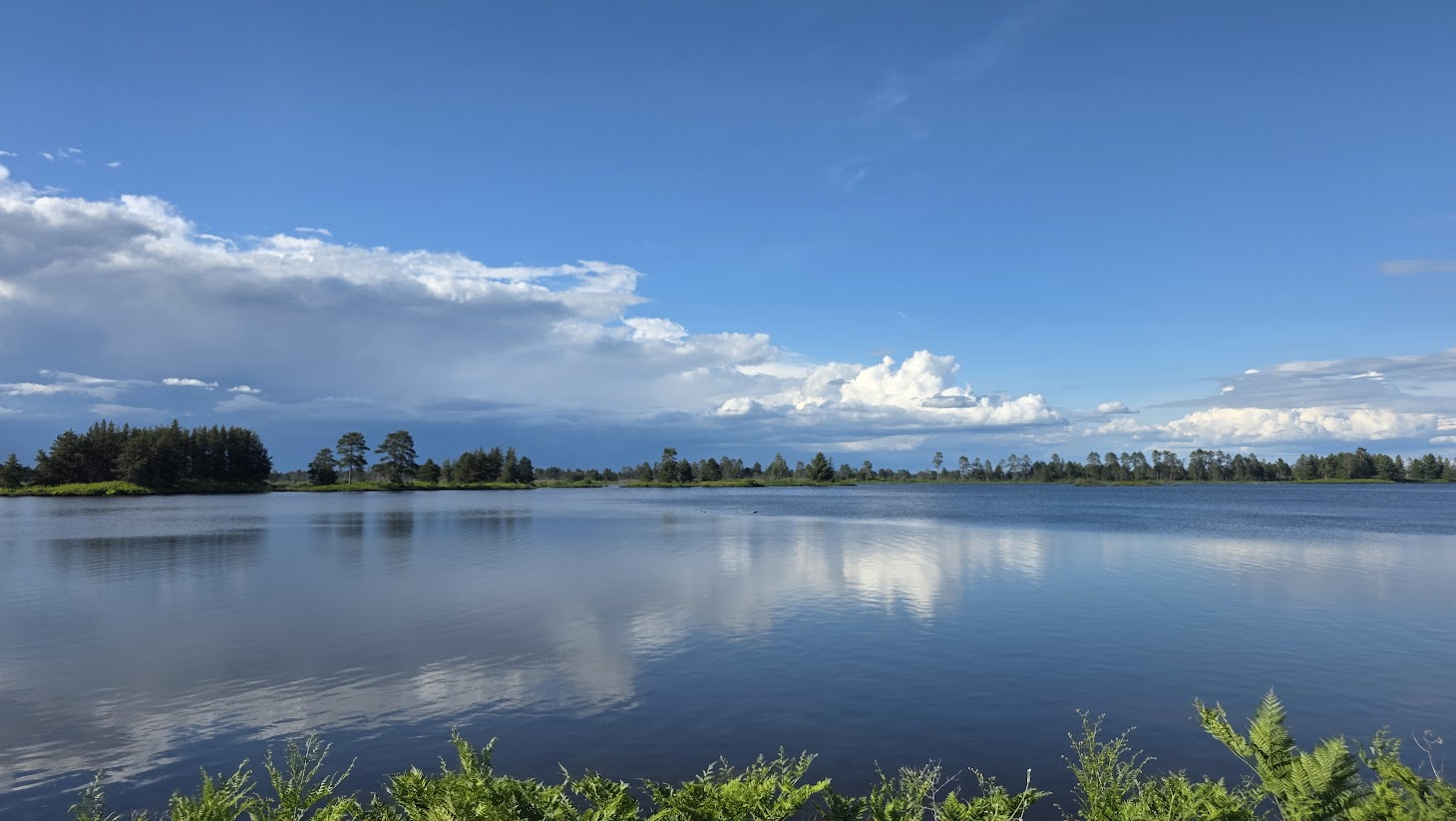
Passing through the Upper Peninsula of Michigan, we drove through the Seney National Wildlife Refuge. There were several wildlife species in that one refuge including various waterfowl, deer and beaver.
We crossed the Upper Peninsula to the south and reached Lake Michigan. This lake is the only one of the Great Lakes completely surrounded by the U.S.
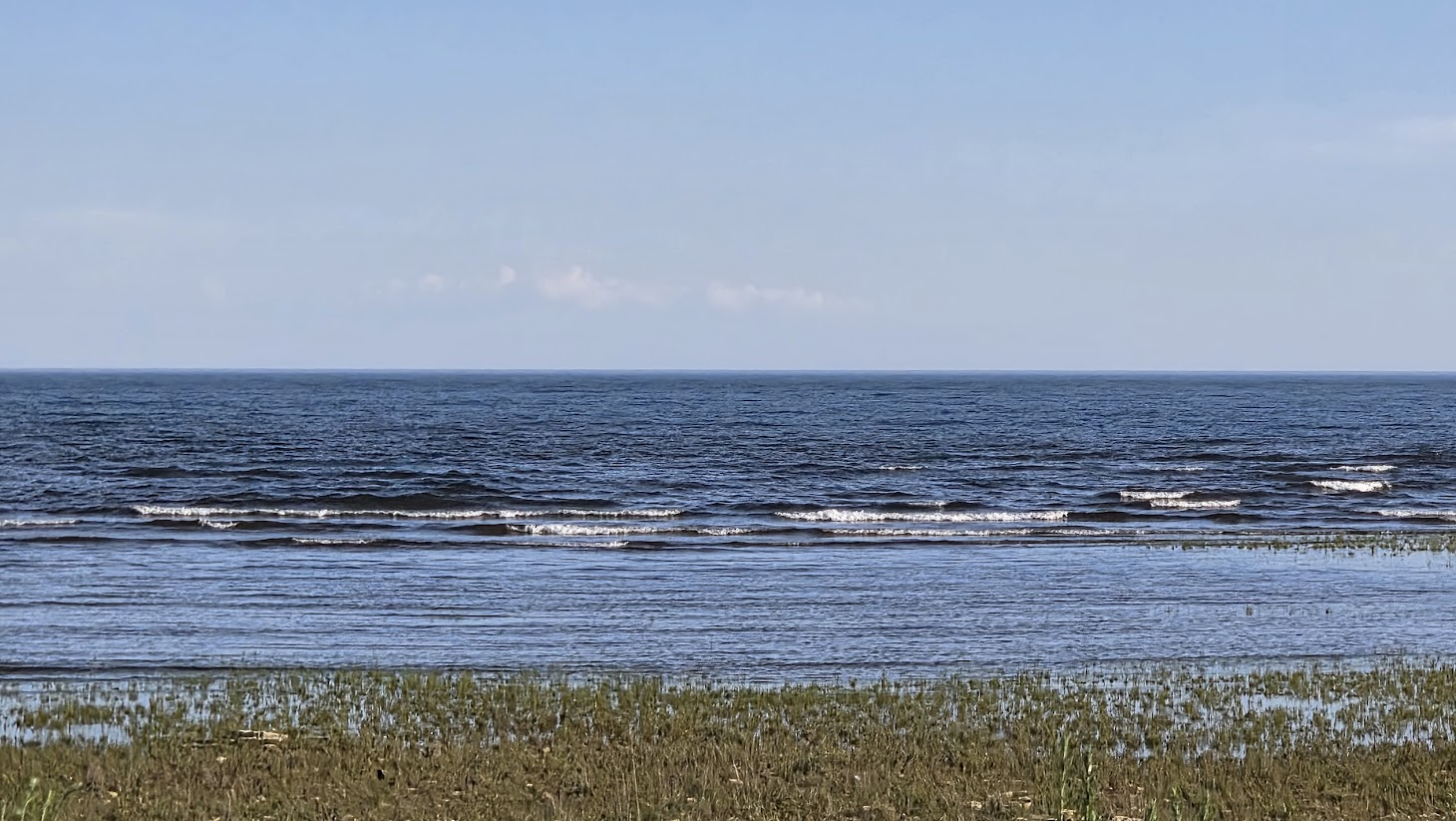
We eventually passed into Wisconsin.
Notice on the map there’s a large bay on northwest Lake Michigan. That’s Green Bay. At the southernmost point of Green Bay is the city of Green Bay, Wisconsin.
We arrived to the city of Green Bay. There we visited Lambeau Field, stadium of the NFL’s Green Bay Packers.

The Packers may well be the NFL team with the most dedicated fanbase. Legally, the team is community-owned and non-profit.
Green Bay is the smallest city with an NFL franchise and it’s not famous for anything else. The Packers are named after the meatpacking business of the city and the team was originally sponsored by a packing company. Founded in 1919, it’s the
third-oldest NFL franchise.
Outside the stadium were statues of Earl “Curly” Lambeau, a founder/player/coach of the team (on the right below) and Vince Lombardi, legendary Packers coach in the 1960s (on the left below).

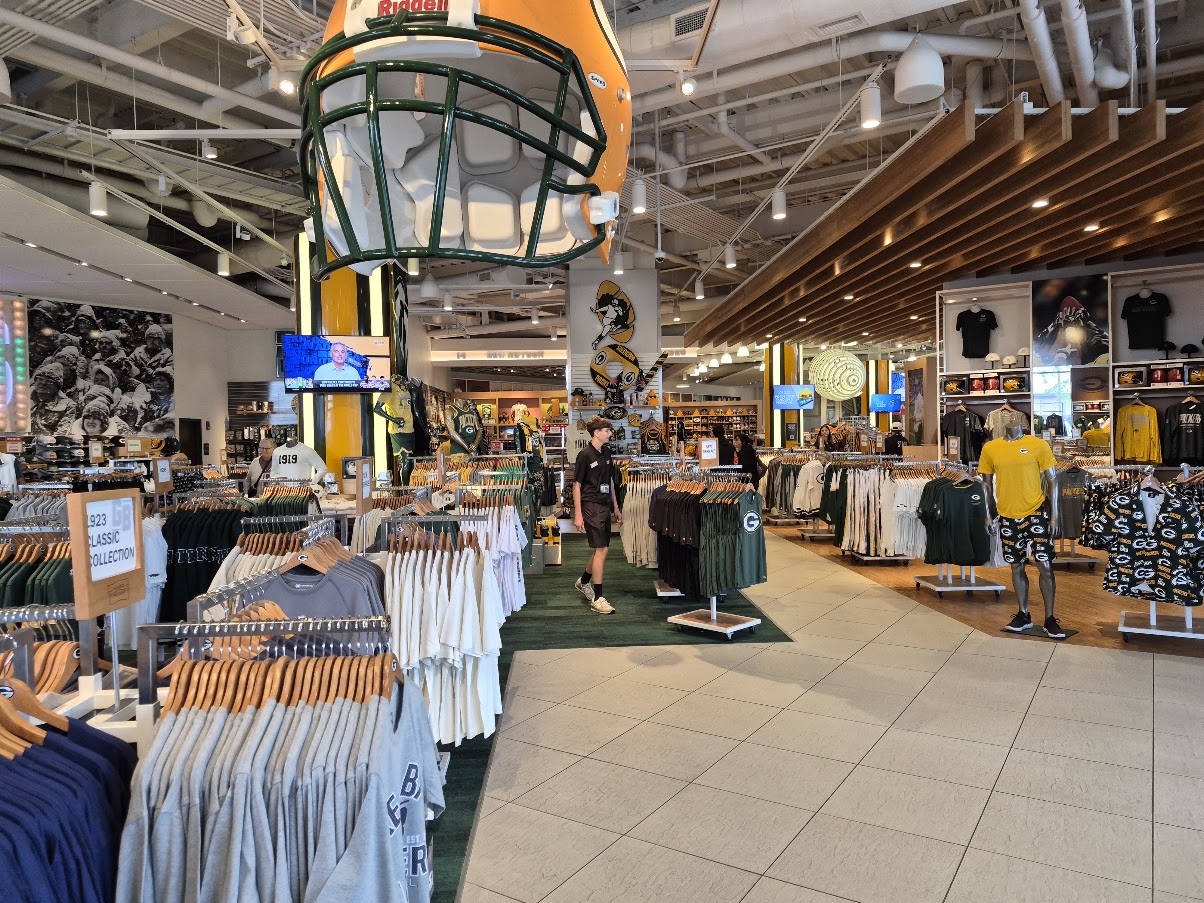
We visited the Packers souvenir shop and it’s big. Just about anything related to the Packers you could imagine, or maybe not imagine, was sold there. There was also some University of Wisconsin Badgers merchandise
From Green Bay we proceeded to Milwaukee, also on Lake Michigan, and strolled around downtown. Along the Milwaukee River is the “Bronze Fonz”. It’s a statue of “Fonzie”, a character from the 1974-1984 sitcom “Happy Days”, set in the 1950s and 1960s in the city of Milwaukee.

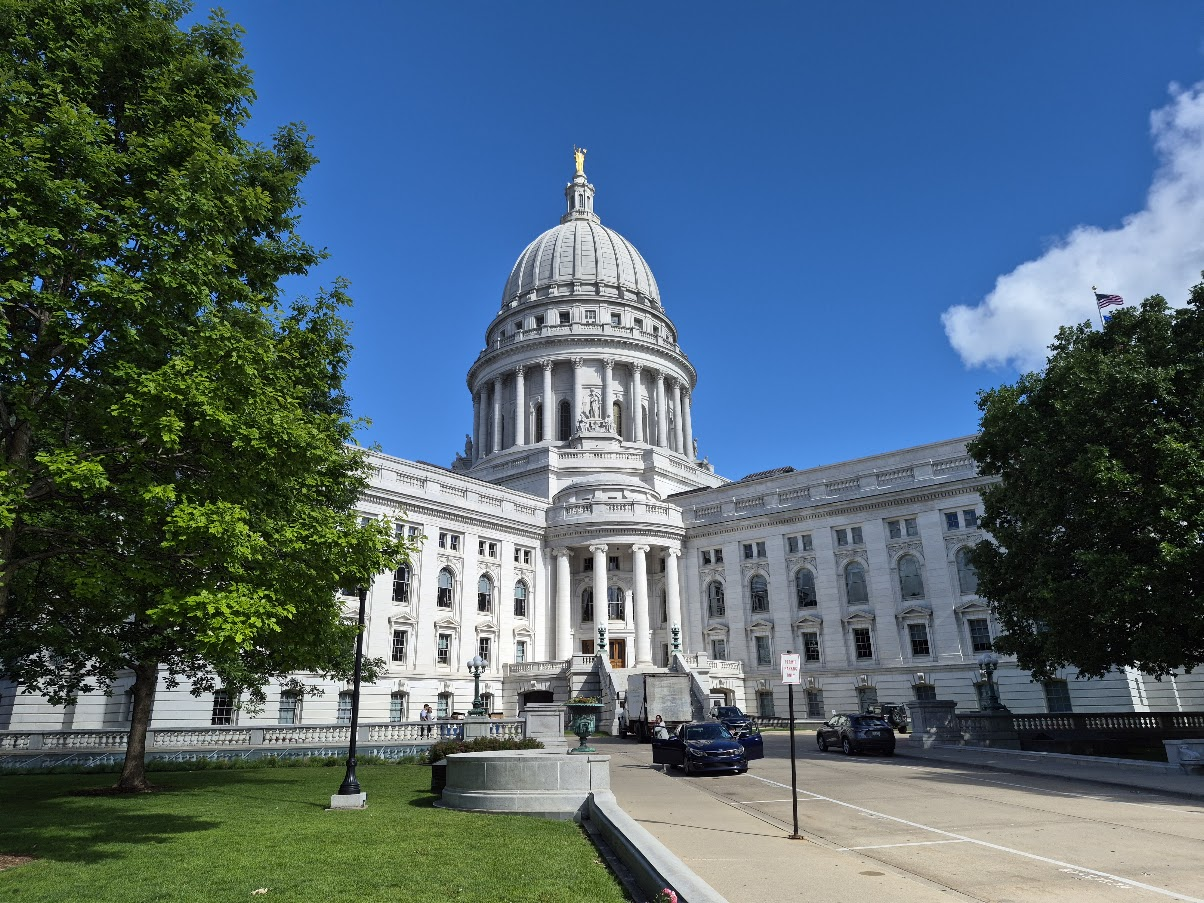
We eventually arrived to the city of Madison, Wisconsin’s capital, where we stayed in a hotel close to the capitol, which we visited.
We made sure to buy some famous Wisconsin cheese and also dropped in on the National Mustard Museum in Middleton, a Madison suburb.

Wisconsin has a distinctive type of barn. The lower part is concrete and the rest is wooden. I wanted to see what one looked like inside.
On our last day in Wisconsin, we stopped at a random farmhouse with such a barn.
I knocked on the door and a lady answered. I explained that we were driving by and saw her barn.
She thought I was a barn painter and told me “we can’t afford to have the barn painted”. I explained we were just tourists passing through. After that, she very hospitably showed us inside the barn, no longer in use, and explained how it works.

These Wisconsin barns are actually dairy barns. Unlike the dairy barn I was used to, where you just bring in the cows twice a day to milk, the Wisconsin barns are used to house the dairy cows during the whole winter, and of course milk them.
Her husband had passed away but she has adult children, and she told us about the barn, the farm and the family. It was a good visit and later in the summer she called Lilia and had a nice talk.
From Wisconsin, we passed into Illinois, passing through an area of rolling farmland. We stopped at the town of Galena, where Ulysses S. Grant resided for a time, with many old buildings downtown.


Photo by Lilia Wall.
We crossed the Mississippi River into Iowa, passing through hilly forested land.

We crossed the Mississippi again, back into Illinois. We visited the John Deere Center at Moline and drove past a John Deere factory in East Moline, where we saw a big lot full of newly-manufactured combines.

Photo by Lilia Wall.
Eventually we crossed the Mississippi yet again, into Hannibal, Missouri, which is right on the Mississippi River across from Illinois.
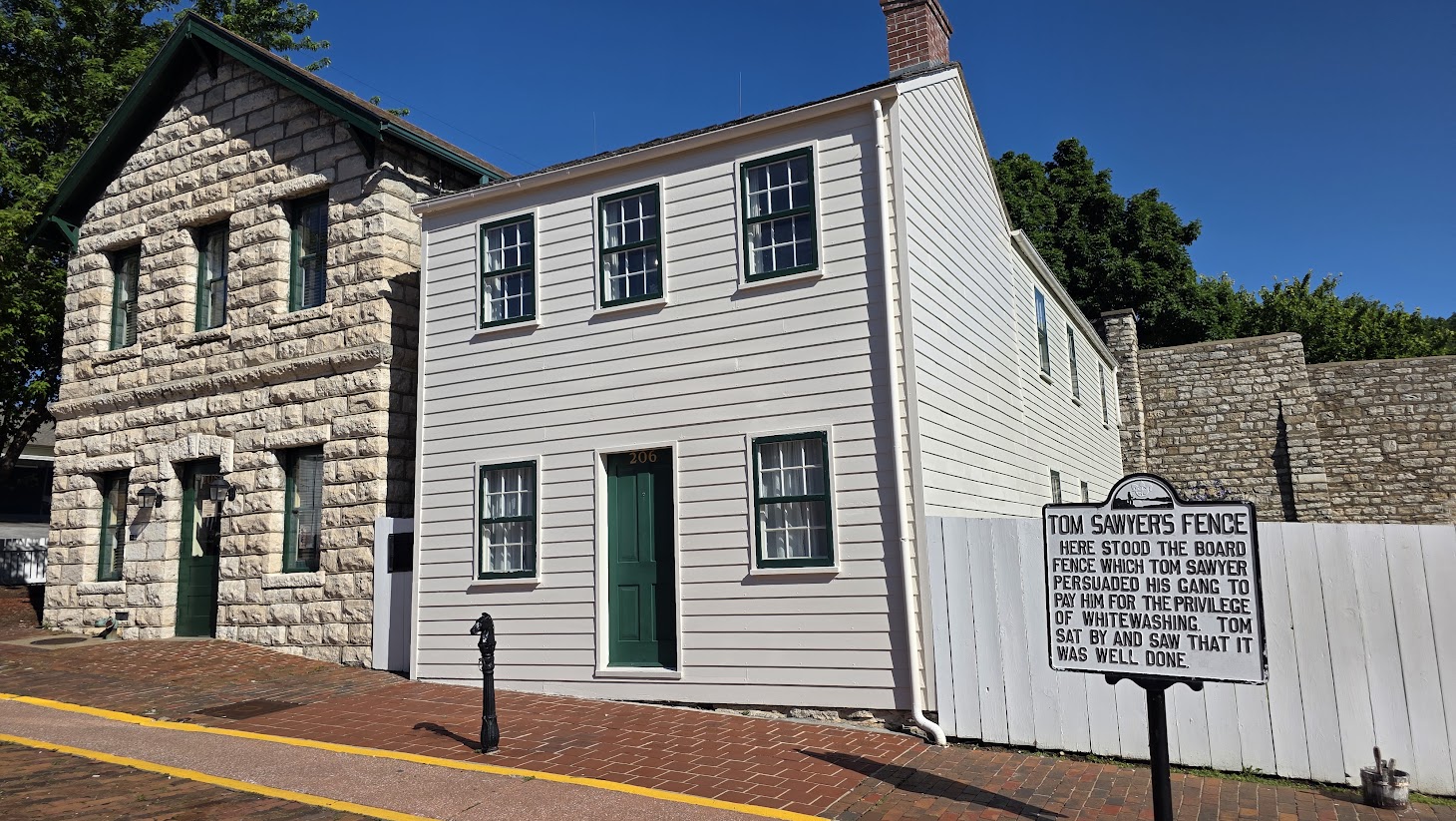
Hannibal was the home of famous author Samuel Clemens, known by the pen name of “Mark Twain”, author of Tom Sawyer, Huckleberry Finn and other books. There we saw the boyhood home of Twain and the neighborhood, which hasn’t changed much since the 1800s.

From there we headed through Missouri, stopping at the capitol building in Jefferson City. Long ago Lewis and Clark camped at that site.
From there we continued on and arrived home. It had been a great trip. There is plenty to see in that region, I highly recommend it. Of course there’s much we didn’t see. Maybe we can return in the future!
Article by Allan Wall, published October 19th, 2026 on www.allanwall.info .
Tags: "Happy Days" TV show, Bemidji, Bloomington in Minnesota, Bob Dylan, Combines, Dairy Industry, Des Moines, Duluth, Earl "Curly" Lambeau, Flint Hills, Fonzie of "Happy Days", Football, Galena in Illinois, George Floyd, George Floyd Square, Great Lakes, Green Bay city, Green Bay of Lake Michigan, Green Bay Packers, Hannibal in Missouri, High Falls on Pigeon River, I-35, Illinois, Iowa, Jefferson City, Joe Ball, John Deere company, Kansas, Kansas City, Kansas River, Lake Itasca, Lake Michigan, Lake Superior, Lambeau Field, Lewis and Clark, Little Pic River, Madison in Wisconsin, Maize, Mall of America, Michigan, Middleton in Wisconsin, Milwaukee, Milwaukee River, Minneapolis, Minnesota, Mississippi River, Missouri, Missouri River, Moline, National Mustard Museum, NFL, Ojibwe language, Old Woman Bay, Ontario, Paul Bunyan, Pigeon River, Pillsbury, Samuel Clemens (Mark Twain), Sault Ste. Marie, Seney National Wildlife Refuge, St. Croix River, St. Marys River, St. Paul in Minnesota, Stillwater in Minnesota, Thunder Bay, Topeka, U.S.-Canada Border, Ulysses S. Grant, Upper Peninsula of Michigan, Vince Lombardi, Wawa in Ontario, Wisconsin, Wisconsin Dairy Barns, World War II